/WRITING · SOFTWARE ARCHITECTURE
Web Protocols Explained: When to Use HTTP, WebSockets, or FTP
Stop using HTTP for everything. A practical guide to choosing the right protocol for your product's core requirements, with real-world examples and code.
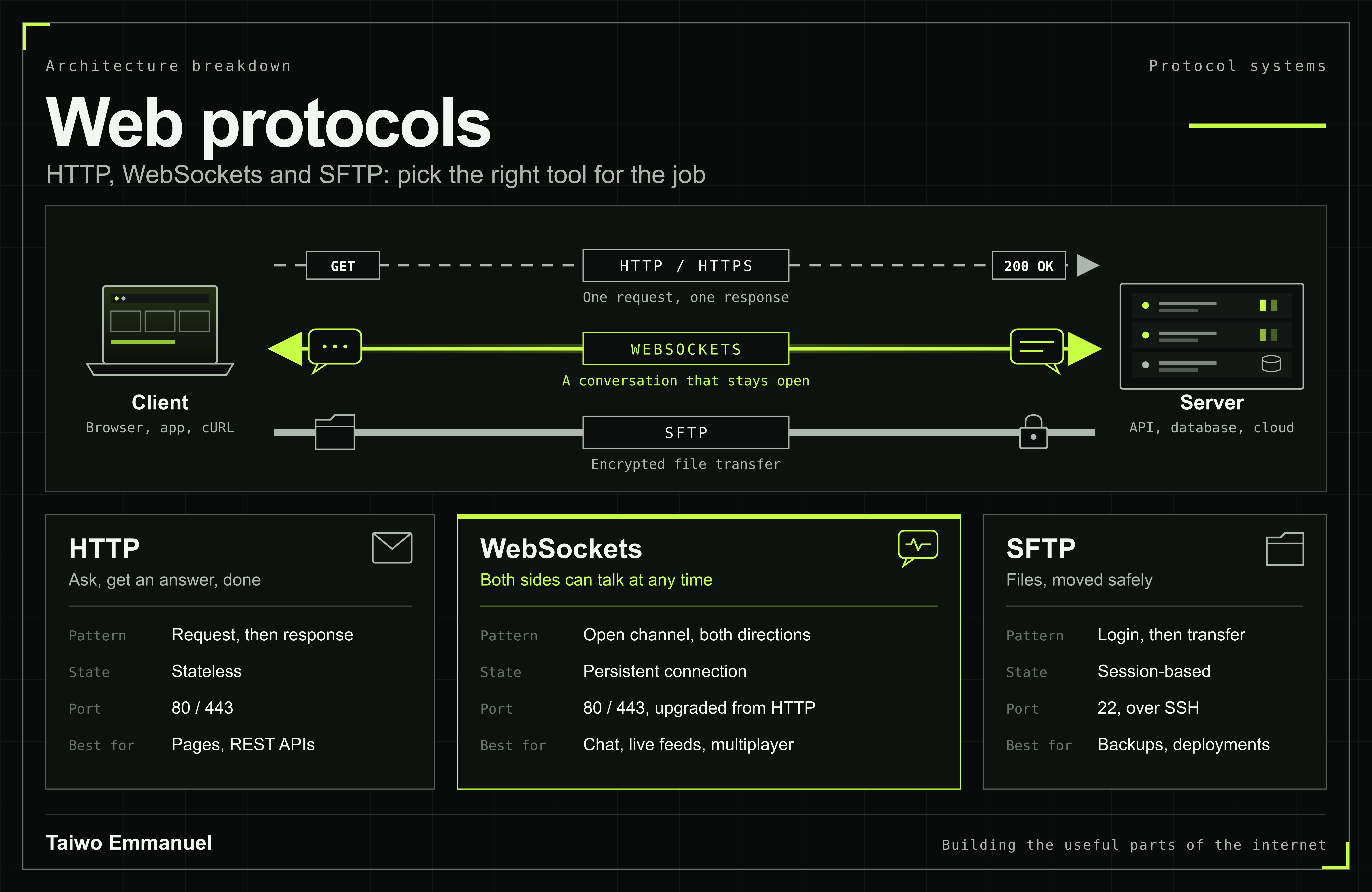
I see a recurring pattern in code reviews and architecture discussions: developers defaulting to HTTP for everything. Need real-time updates? Poll every 2 seconds. Need notifications? Poll every 3 seconds.
The result is wasted server resources, poor user experience, and unnecessary complexity. Each web protocol was designed for a specific purpose. Choosing the right one isn't about following a trend; it's about matching the tool to the product's core requirement.
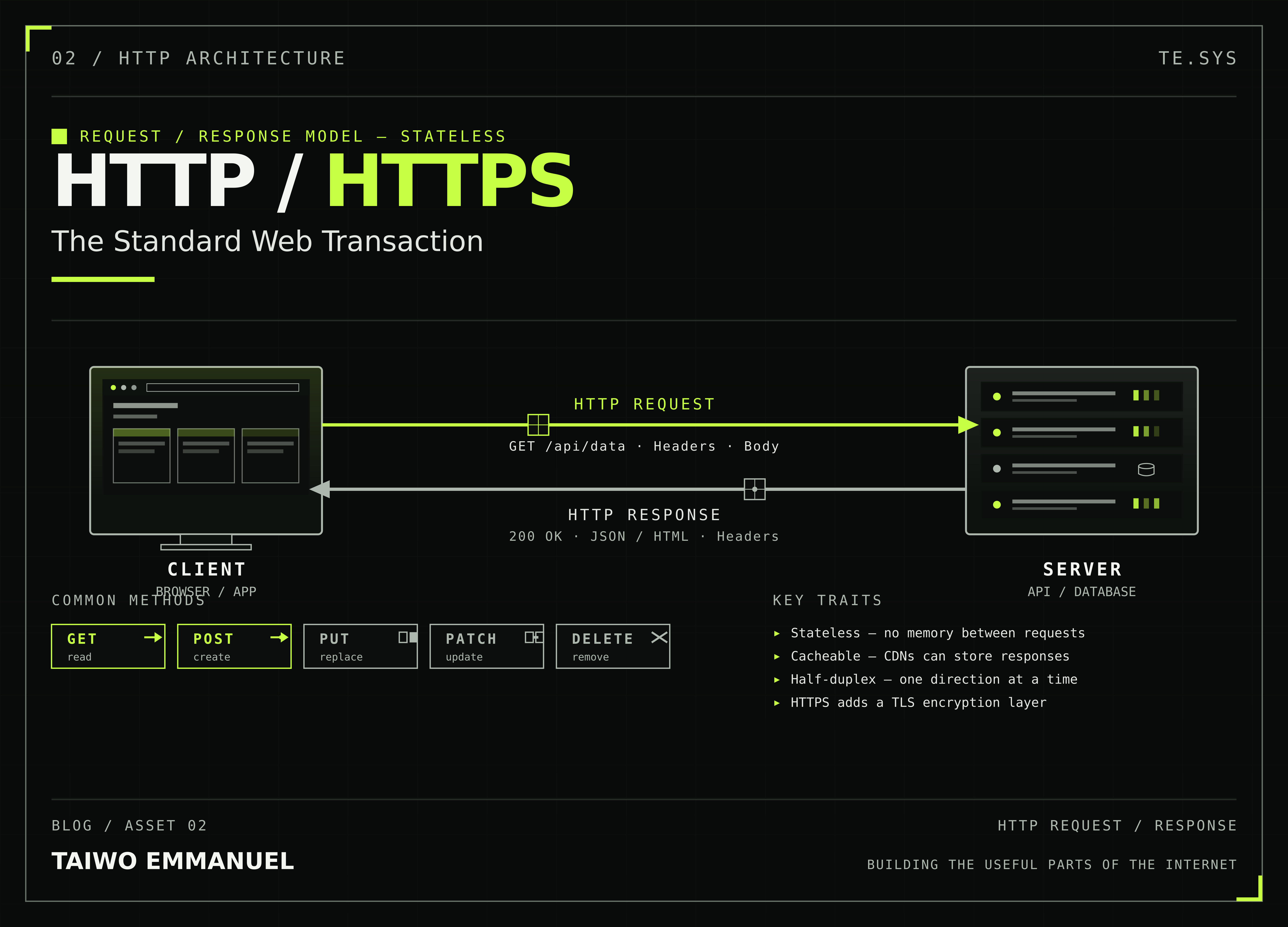
HTTP / HTTPS: The Request-Response Workhorse
HTTP follows a strict request-response model. The client asks, the server answers, and the connection closes. This is perfect for:
- RESTful APIs
- Static content delivery
- Form submissions
It is simple, stateless, and highly cacheable. However, it is fundamentally inefficient for frequent, real-time updates.
 TAIWO EMMANUEL / CODE NOTE
// The Polling Problem: Wasting resources
setInterval(async () => {
  const response = await fetch('/api/notifications');
  const data = await response.json();
  // 95% of these requests return "no new data"
}, 2000);
WebSockets: The Persistent Connection
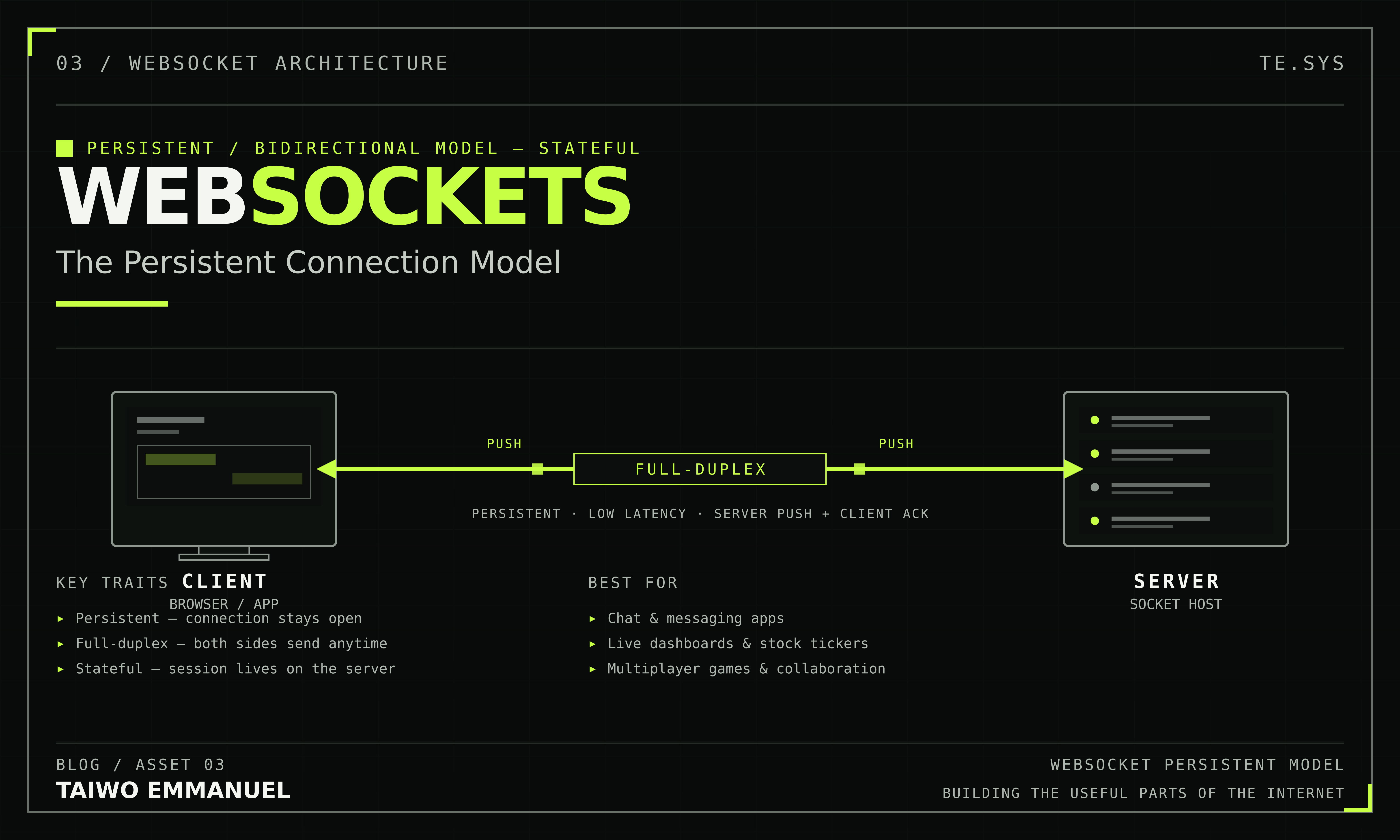
WebSockets create a persistent, bidirectional channel. After an initial HTTP upgrade handshake, the connection stays open. Either side can send data at any time. This is ideal for:
- Chat applications
- Live dashboards (stock prices, sports scores)
- Collaborative editing
- Multiplayer gaming
 TAIWO EMMANUEL / CODE NOTE
const ws = new WebSocket('wss://api.example.com/live');

ws.onopen = () => {
  console.log('Connection established');
};

ws.onmessage = (event) => {
  const data = JSON.parse(event.data);
  updateUI(data); // Instant update, no polling
};.SFTP: Encrypted File Transfer
When moving large files, automated backups, or integrating with legacy systems, HTTP is often the wrong tool. SFTP (SSH File Transfer Protocol) provides encrypted, resumable file transfers.
*Note: For modern web applications, consider using presigned S3 URLs or chunked HTTP uploads with progress tracking instead of routing files through your application server.*

The Takeaway
Production systems don't guess. They match the tool to the job.
- Need real-time, bidirectional updates? **WebSockets**.
- Transferring large files securely? **SFTP**.
- Standard web requests? **HTTPS** (always).
Stop using HTTP for everything. Choose the right wire for your system.